

Tupperware has been the unsung hero of kitchens everywhere, but can it handle the heat of the microwave? Picture this: a steaming bowl of leftovers, ready to be devoured, but first, the question lingers—will the trusty container survive the microwave or end up in a plastic meltdown?
Understanding Tupperware
Tupperware remains a popular choice for food storage and reheating. Understanding its materials and safety features ensures proper use in the microwave.
Materials Used in Tupperware
Tupperware containers are primarily made from plastic types like polyethylene and polypropylene. These materials provide durability against everyday use. High-impact polystyrene also appears in some products, giving additional strength. Each type of plastic must meet specific standards to ensure microwave safety. Checking the bottom of the container for microwave-safe labels guarantees its suitability in the microwave. Using Tupperware marked with a microwave-safe symbol protects the container from melting or warping.
Safety Features
Safety features in Tupperware enhance its usability in the microwave. Containers typically incorporate BPA-free materials, ensuring safety for food storage. Certain designs include vents, preventing pressure buildup during heating. These vents also allow steam to escape, minimizing the risk of burns. Additionally, many Tupperware products withstand temperatures up to 250 degrees Fahrenheit. This temperature threshold ensures they remain intact during reheating processes. Understanding these features facilitates safer food reheating practices without compromising container integrity.
Microwave Safety of Tupperware
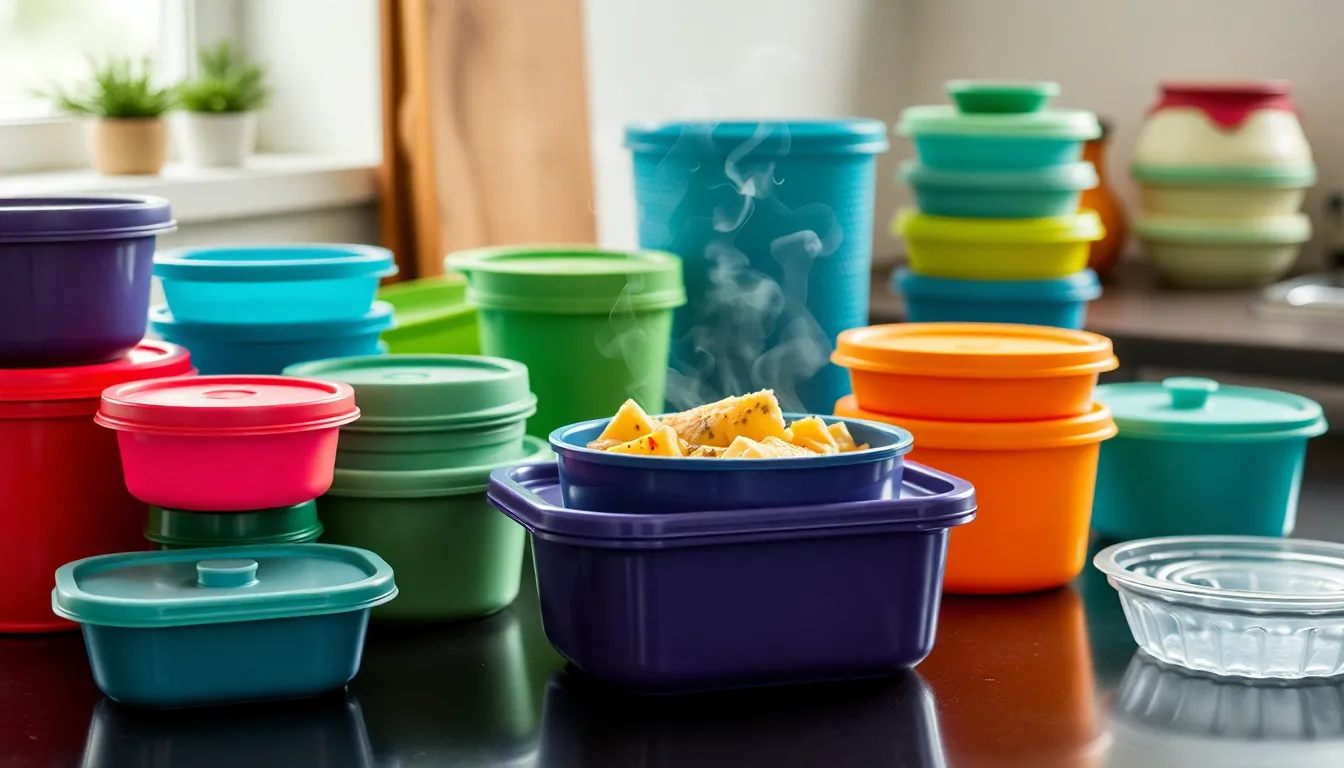
Tupperware containers are reliable for microwave use when properly selected. Understanding their material and safety features enhances reheating practices.
BPA-Free Options
BPA-free Tupperware products provide a safer choice for microwave heating. These containers avoid harmful chemicals, making them ideal for health-conscious consumers. Manufacturers ensure that BPA-free options meet strict safety standards. Choosing BPA-free materials helps minimize exposure to potential toxins during food heating. Many Tupperware items labeled as BPA-free are suitable for temperatures up to 250 degrees Fahrenheit. It’s essential to verify this information on the product label to confirm safety.
Indications for Microwave Use
Specific indications help determine whether Tupperware is microwave-safe. Look for microwave-safe labels located on the bottom of containers. Approval from regulatory agencies illustrates that these products meet necessary standards. Not all Tupperware is uniform; some items might be unsuitable for high temperatures or lengthy use in the microwave. Recognizing vent designs allows steam to escape, preventing pressure buildup. Heed these guidelines to enable safer reheating while maintaining container integrity.
Best Practices for Microwaving Tupperware
Understanding how to use Tupperware in the microwave ensures safety and functionality. Following a few simple practices can enhance the reheating experience.
How to Properly Use Tupperware in the Microwave
Inspect containers for microwave-safe labels. Many Tupperware products feature these labels on the bottom, indicating their suitability for use. Remove any lids before microwaving food to allow steam to escape. This step helps prevent pressure buildup. Place containers on a microwave-safe plate to catch any spills. Set microwave temperatures to appropriate levels, typically under 250 degrees Fahrenheit, to protect container integrity. Stir food midway through cooking for even heat distribution. Allow containers to cool before touching, as they may become warm during use.
Avoiding Common Mistakes
Avoid using Tupperware that isn’t labeled as microwave-safe. Using non-compatible containers can lead to melting or hazardous chemicals leaching into food. Don’t forget to vent containers if they lack built-in mechanisms. Neglecting this can cause excessive pressure buildup. Refraining from microwaving food stored in aluminum foil or metal containers avoids potential sparks and damage. Microwaving for too long may overheat food and cause containers to warp. Always monitor cook times for optimal safety and effectiveness.
Alternatives to Tupperware
Exploring alternatives to Tupperware can expand kitchen options while ensuring safe food storage and reheating. Different materials offer various benefits.
Glass Containers
Glass containers provide a sturdy alternative to Tupperware. They withstand high temperatures without leaching chemicals, making them ideal for microwave use. Many brands feature airtight lids, ensuring freshness and preventing spills. Additionally, glass does not retain odors or stains from food, maintaining a clean look over time. Many glass containers are also oven and dishwasher-safe, allowing for versatile cooking and easy cleanup. Choosing borosilicate glass enhances durability, enabling these containers to endure thermal shock during heating.
Ceramic Options
Ceramic containers serve as another reliable option for microwave cooking. Often glazed, they resist moisture and staining, ensuring easy maintenance. Many ceramic dishes feature beautiful designs, enhancing kitchen aesthetics. Furthermore, ceramics can typically handle microwave temperatures well, provided they don’t contain metallic components. Safe options often include lids that can vent steam, reducing the risk of splatter during reheating. Choosing thicker ceramic ensures longevity and withstands heating cycles effectively. Different shapes and sizes accommodate various food portions and recipes, making ceramics a versatile kitchen asset.
Tupperware offers a reliable solution for reheating food in the microwave when used correctly. By selecting microwave-safe containers and adhering to safety guidelines, users can enjoy the convenience of Tupperware without worry. The emphasis on BPA-free materials and vent designs further enhances its safety for everyday use.
For those seeking alternatives, glass and ceramic containers provide excellent options that withstand high temperatures and ensure food safety. Ultimately, understanding the features of Tupperware and its alternatives empowers consumers to make informed choices in their kitchen, enhancing their cooking and reheating experience.