

When winter rolls in and snow blankets the ground, the debate heats up: is all-wheel drive (AWD) or four-wheel drive (4WD) the ultimate snow-slaying champion? Picture this: you’re cruising down a snowy road, sipping hot cocoa, and feeling invincible. But wait! Do you know which drivetrain will keep you from becoming a snowman?
Understanding AWD and 4WD
All-wheel drive (AWD) and four-wheel drive (4WD) represent two different systems designed for improved traction in challenging conditions like snow. Each system offers unique benefits tailored to various driving needs.
Definitions and Mechanics
AWD automatically distributes power to all four wheels of a vehicle. This system functions efficiently on various surfaces, including snow, ice, and rain. Certain vehicles utilize a center differential, allowing for differences in wheel speed between the front and rear axles during cornering. 4WD, on the other hand, connects all wheels through a transfer case, often providing an option to lock the differentials. This feature enhances traction in off-road scenarios and severe weather conditions.
Key Differences Between AWD and 4WD
AWD operates seamlessly in real-time and requires no input from the driver. This characteristic makes it suitable for everyday driving, especially in changing weather. 4WD demands manual engagement, empowering drivers to choose when to activate it. This capability excels in off-road situations, providing a rugged advantage. While AWD generally handles snowy roads optimally, 4WD remains preferable for extreme conditions or off-road travels. Understanding these fundamental differences helps drivers make informed decisions tailored to their driving circumstances.
Performance in Snow
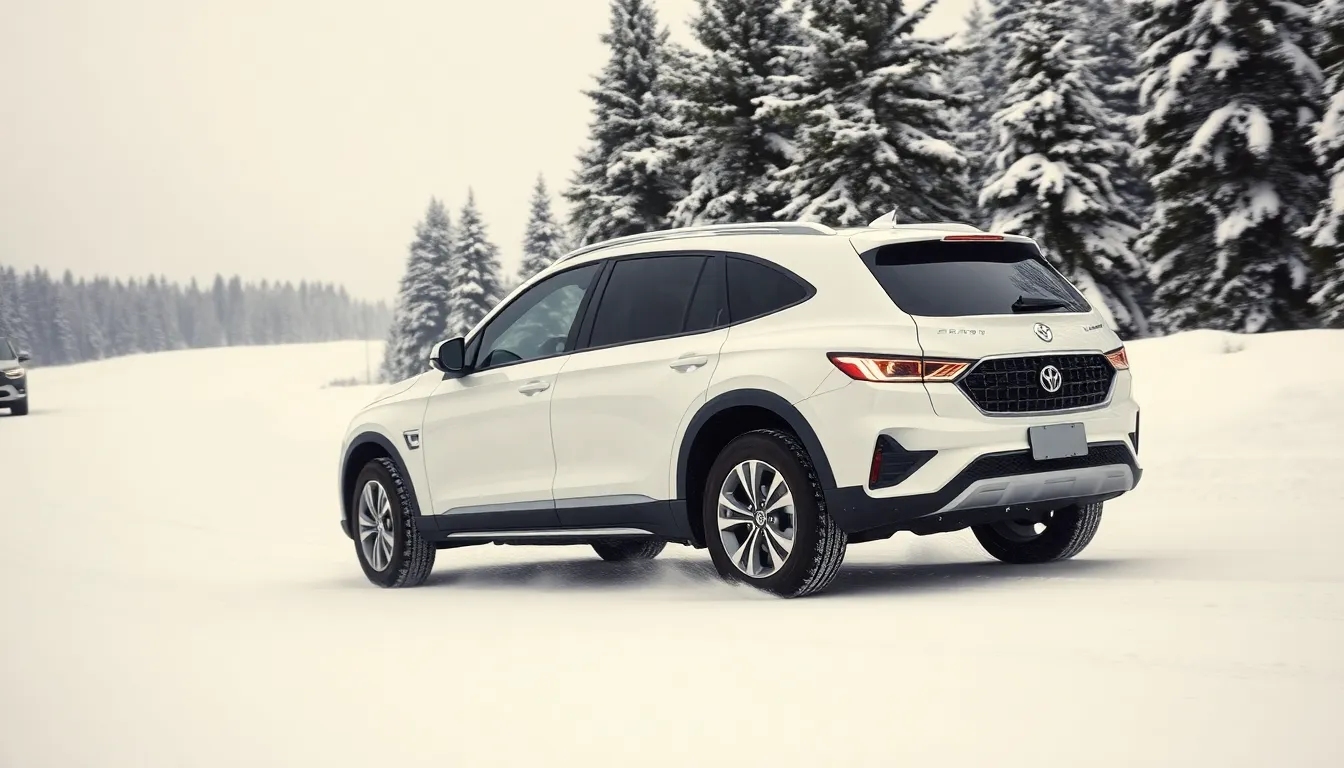
Understanding performance differences in snowy conditions helps in choosing between all-wheel drive (AWD) and four-wheel drive (4WD). Each system has unique attributes that affect driving experience on slippery surfaces.
Traction Comparison
AWD systems excel in providing seamless traction in snowy conditions. All four wheels receive power automatically, enhancing grip on icy roads. 4WD, while robust, requires manual engagement to activate the system. This option may lag behind in real-time traction adjustments compared to AWD. In scenarios involving sudden snow accumulation, AWD’s ability to shift power quickly makes it a reliable choice. When facing deep snow or off-road situations, 4WD with its dedicated transfer case can outperform AWD by distributing torque effectively. Drivers experiencing frequent snow mixed with rain benefit from AWD’s adaptability while 4WD remains beneficial during extreme snow depths.
Handling and Stability
Handling and stability differ significantly between AWD and 4WD on snowy roads. AWD offers better stability through constant power distribution, allowing for smoother cornering on slick surfaces. Vehicles equipped with AWD respond well to drivers’ inputs, ensuring confidence even in challenging conditions. 4WD enhances stability during steep climbs and uneven terrains thanks to its locked differentials. However, handling suffers on flat, icy roads where immediate response matters. An AWD vehicle typically provides more predictable control during quick maneuvers, reducing the risk of skidding. Opting for AWD results in a more secure driving experience, especially when navigating sharp turns or sudden stops amidst winter weather.
Advantages of AWD in Snow
All-wheel drive (AWD) offers distinct benefits when navigating snowy conditions. Many drivers find it enhances their confidence on slippery roads.
Better Fuel Efficiency
AWD systems generally promote better fuel efficiency compared to four-wheel drive (4WD) options. Fuel consumption rates vary, with some AWD vehicles achieving around 25% improved efficiency than traditional 4WD systems. Operating on all four wheels when needed, AWD optimizes power distribution, avoiding unnecessary energy drain. Fuel-saving features in modern AWD systems make them attractive for everyday driving in varying weather. Tighter integration of technology leads to less engine strain, contributing to cost savings.
Automatic Adjustments
Automatic adjustments mark a key strength of AWD in snowy conditions. These systems engage power distribution without driver intervention, adapting to changing road conditions instantly. Slippery surfaces trigger immediate traction enhancements, ensuring optimal grip on icy roads. While 4WD requires manual settings, AWD operates seamlessly and continuously. Because of this responsiveness, drivers experience increased stability during sudden weather changes. An intelligent torque vectoring mechanism allows for enhanced handling and control, making AWD the preferred choice in snowy environments.
Advantages of 4WD in Snow
Four-wheel drive (4WD) systems offer distinct advantages in snowy conditions, particularly for off-road and challenging terrains.
Off-Road Capability
4WD excels off-road due to its robust drivetrain. With features like low-range gearing, it provides unmatched torque, allowing vehicles to traverse deep snow or rugged landscapes. These systems often include locking differentials, ensuring that all wheels receive power even when traction varies. An example includes trucks designed for extreme conditions, which can maneuver through snow drifts and uphill gradients seamlessly. Drivers seeking adventure in harsh winter environments find 4WD’s capability ideal, enhancing confidence when facing difficult trails covered in snow.
Driver Control
In snowy conditions, 4WD offers enhanced driver control. Manual activation allows drivers to engage the system only when necessary, providing power when needed. This direct engagement gives a feeling of control, making it easier to navigate through unpredictable snowy roads. Drivers familiar with their vehicle’s dynamics often appreciate the ability to maximize torque in critical situations. Adjusting power distribution allows for better handling in slippery conditions, which can be crucial during severe weather changes. With decision-making resting in the hands of the driver, 4WD proves advantageous for those who prefer a hands-on approach to winter driving.
Considerations for Choosing Between AWD and 4WD
Selecting between AWD and 4WD involves several critical factors, particularly driving conditions and vehicle type. Understanding each element aids in making an informed choice.
Driving Conditions
Driving conditions significantly influence the effectiveness of AWD and 4WD. Snow-covered roads often require reliable traction. AWD excels in light to moderate snow, providing automatic power distribution that maintains grip. On the other hand, heavy snow or deep drifts benefit from 4WD’s increased torque capability, ensuring all wheels receive power even when some lose traction. Additionally, icy road surfaces present challenges where AWD’s seamless adjustments are advantageous. The need for quick responses to sudden weather changes underscores AWD’s strengths, while 4WD shines in severe conditions. Ultimately, considering the typical weather scenarios faced aids in choosing the right system.
Vehicle Type
Vehicle type plays a vital role in the decision-making process. AWD systems appear in many cars and crossovers designed for all-weather capability. These vehicles often prioritize comfort and fuel efficiency alongside performance. SUVs and trucks typically equipped with 4WD systems emphasize ruggedness and off-road capability. Trucks with 4WD showcase features like low-range gearing, enhancing their power for difficult terrains. When evaluating personal needs, consider the primary use of the vehicle. Those seeking versatility might lean toward AWD. Conversely, off-road enthusiasts or individuals navigating harsh winter conditions often find 4WD to be the better option.
Choosing between AWD and 4WD for snowy conditions depends on individual driving needs and circumstances. AWD systems offer automatic traction and stability, making them ideal for everyday driving on slick roads. Their seamless operation provides confidence and efficiency in light to moderate snow.
On the other hand, 4WD shines in extreme conditions and off-road scenarios. Its robust design and manual engagement allow for better control in deep snow and challenging terrains. For those who frequently navigate rugged landscapes, 4WD may be the better choice.
Ultimately, understanding the unique advantages of each system helps drivers select the right option for their winter driving experiences.